Overload protection
 | Technical data Please refer to the information on load type, maximum output current, and maximum short-circuit current in the technical data section of the relevant documentation. |
When switching on lamp loads, high starting currents occur that are limited by the output circuit of the terminals (see Fig. Overload current limit).
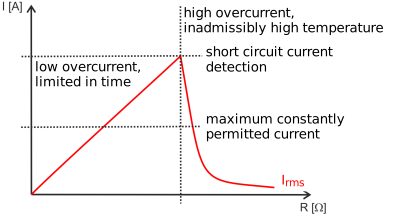 Fig.19: Overload current limit
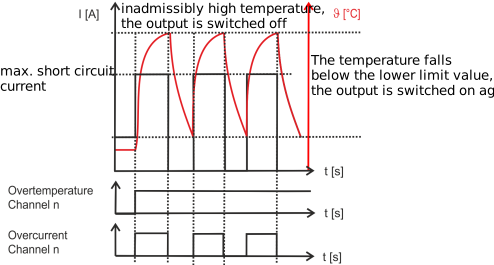 Fig.20: Schematic illustration of the thermal switch-off in the event of overload
In the event of long-term overload and/or short-circuit, the output is protected by the thermal switch-off of the channel. The output circuit of the terminal limits the current. The terminal maintains this current until significant auto-heating of the channel occurs. When the upper temperature limit is exceeded, the terminal switches the channel off. The channel is switched on again after it has cooled down to below the lower temperature limit. The output signal is clocked until the output is switched off by the controller or the short-circuit is eliminated (see Fig. Schematic illustration of the thermal switch-off in case of overload). The clock frequency depends on the ambient temperature and the load of the other terminal channels.
Short circuit or prolonged overload on one channel leads to an increase in the device temperature. If several channels are overloaded, this leads to a rapid increase in the device temperature. The overloaded channels are switched off when the upper limit for the device temperature is exceeded. The channels are only switched on again if the temperature falls below the lower limit values for both the device and the channel. The non-overloaded channels continue operating properly.