Overtemperature
| |
Serious injuries due to hot surfaces The housing surface may reach a temperature of over 200 °C. Failure to observe the protective measures may result in severe burns to the skin and the braking resistor or surrounding components may be destroyed.
|

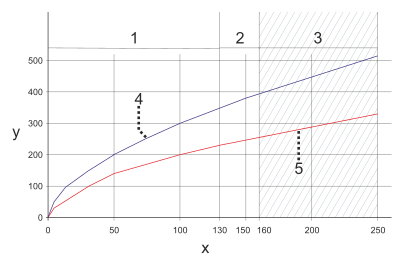
Position | Explanation |
|---|---|
x | Continuous power in % of the type power |
y | Overtemperature in K |
1 | Normal operating range |
2 | Permitted operating range |
3 | Inadmissible operating range |
4 | At resistor element |
5 | At the housing surface |
An application may require a higher continuous power than the specified type power. You can implement this state if a higher temperature of the braking resistor is permissible.
Operating ranges
The following table provides information on the development of overtemperature with continuous power:
Operating range | Explanation |
|---|---|
Normal: | Recommended operating range for maximum service life with error-free operation |
Permissible: | Still permissible operation with short service life and high failure probability |
Impermissible: maximum 160 % | Risk of destruction of the braking resistor due to overheating and endangerment of the surrounding components due to high temperature |